From the beginning, let me say, if you find evidence of termites in your home, leave the treatment to a professional! Getting rid of termites requires special skill and equipment. It may be necessary to use masonry drills, pumps, large capacity tanks, and soil treatment rods. It is also important to have a knowledge of building construction in order to identify the critical areas where termites are most likely to enter your home or business. These areas are often hidden and difficult to access. That being said, here's some information to help you know and understand what treatment your termite technician will use.
There are two categories of termite treatment, liquid and bait. Liquid termiticides have been around for decades. They provide a long lasting chemical barrier that keeps termites in the ground from entering buildings. In most cases, termites already present in the structure will also die off since they cannot return to the soil. In the past, most of the products used were repellents and contact killers. Current products, such as Termidor and Premise are non-repellent, so termites tunneling into the treatment zone can't detect the products and are killed through the "transfer effect".
 |
| Visit termidorhome.com to learn more about how these products work. |
Technicians will use these products to do a "perimeter" treatment. This means a thorough application of the chemical is done around the entire outside foundation wall of the building. In some cases, this requires that porches, stoops, and even slabs be drilled through in order to inject the liquid into the soil along the foundation walls. When applied according to label directions, liquid termiticides should control termites for 5 years. The actual length, however, will depend on factors such as the thoroughness of the application, environmental conditions, and the density of termites present.
Like most people, you may wonder if termiticides will be harmful to your family or pets. These products are tested extensively, and the studies are evaluated by the U.S. Environmental Protection Agency. Based on current knowledge, registered termiticides pose no significant hazard to humans, pets, or the environment when applied according to the label directions.
 |
| photo courtesy of northjerseytermite.com |
Termite baits are another type of treatment commonly used. These consists of paper, cardboard, or other type of cellulose food, combined with a slow acting lethal substance. Baits are placed out in the yard, flush with the ground, in cylindrical plastic stations. These are often hidden in your landscaping (see pictures below for how these baits look in your yard). Foraging termites will consume the bait and then share it with the rest of the termites in the nest, resulting in a gradual decline in termite numbers. Baits are inspected on a monthly or quarterly basis for termite activity. If live termites are found in a station, a toxic bait will be placed inside.


If termites continue to be a problem, it does not necessarily mean that your termite technician did a "bad job" or that you were "cheated." Unlike other services, termite control involves living creatures. Even the best treatments may fail at times, when termites find their way through tiny, untreated gaps in the soil. While the goal is to create a continuous, impenetrable chemical barrier, this is near to impossible to achieve in reality.
PREVENTION IS THE BEST TREATMENT! Keeping in mind that termites need wood materials to eat and moisture to live, you can prevent them from having these resources and minimize your risk of being infested by termites.
-Keep all sub-structural wood at least 6-10 inches above the soil beneath the building.
-Keep all mulch and landscaping at least 6 inches back from the foundation.
-Repair structural and plumbing leaks.
-Remove piles of trash and debris from around your home.
-Remove dead tree stumps from the yard.
-Keep firewood stacked away from your home.
-Keep gutters clean.
-Make sure downspouts are long enough to direct water away from the foundation.
-Avoid direct wood to ground contact when building a porch or deck.
-Siding, brick veneer, or foam insulation should not extend below the soil grade.
-Keep attic and foundation areas well ventilated and dry.
*Invest in a preventative termite control plan. Having these liquid or bait treatments done and checked on a regular basis can help keep your home safe from termites. Most of us have a security system in our home, even if we've never had burglars, right? Your home also needs a security system to protect from smaller invaders, termites!
Termite damage can be very costly to repair, not to mention the emotional stress it can have on the homeowner. Call Mid-Georgia Pest Control today at 770-962-4240 to get started on a prevention plan!
Below are some pictures of recent termite damage we've seen and treated:
In these first two photos, termites damaged through the sheet rock:
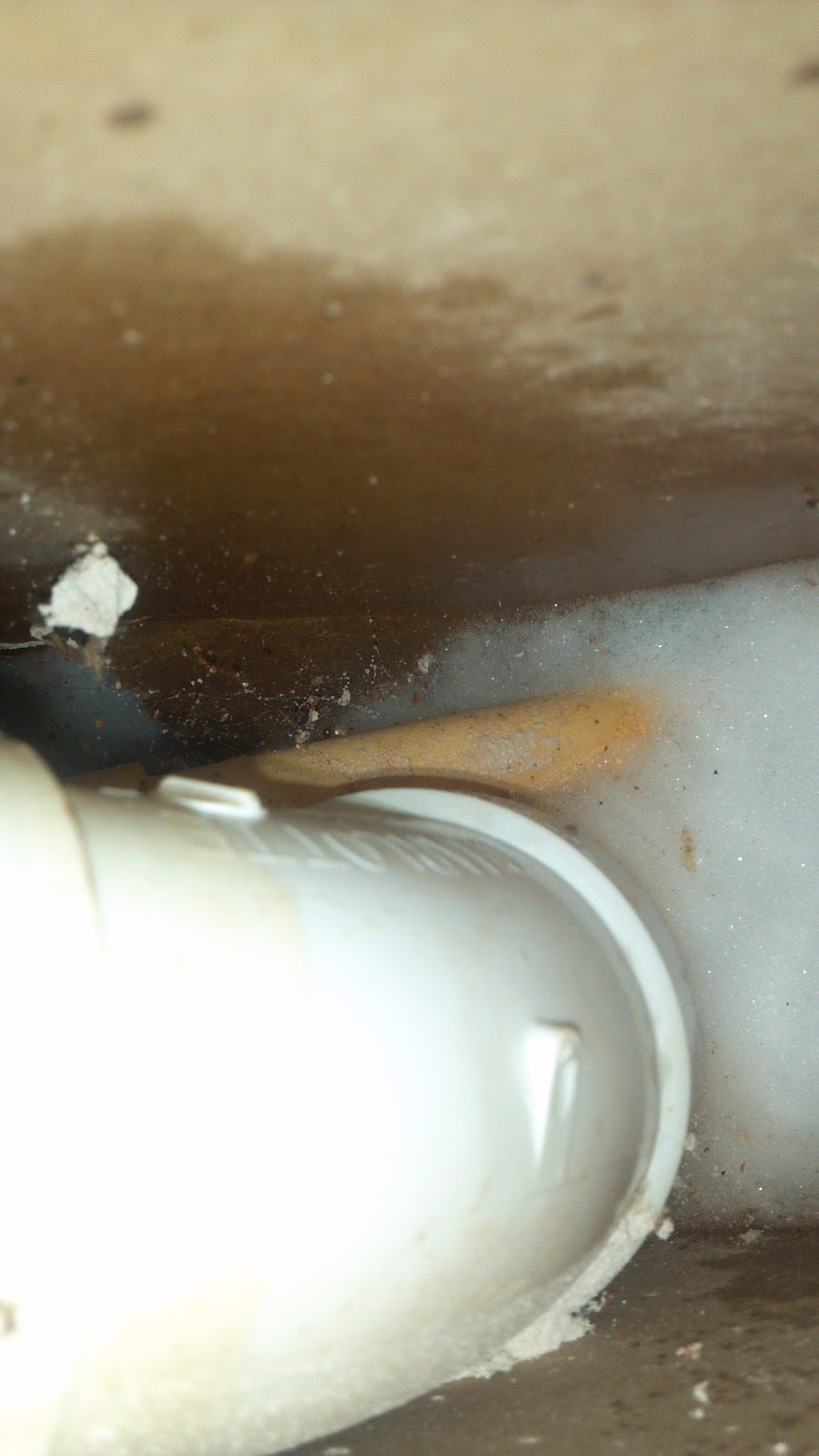
In these next photos, a foamed wall void was created around piping:
In this situation, you can see the termite tunnels inside the wall of this home around the pipes. During the inspection, our team saw active termites poking their heads out of small holes in the wall. They had also eaten through a piece of painter's tape the homeowner had used to cover a hole.
Below are coasters under a sink. Termites had eaten the bottom of the coaster leaving wood shavings around them. If you look closely, you can also see wings from the swarmers.


.jpeg)